The Fulldome UK Resources page hosts a remarkable collection: 21 recorded talks from FDUK events, featuring some of the most experienced practitioners in the field. The talks cover everything from projection technology to storytelling theory to social impact, and they represent something rare — a community being genuinely candid about what works, what doesn't, and what they still don't know.
We ran the entire archive through speech-to-text and did a structured thematic analysis. What follows is a synthesis of what the community collectively knows — and what surprised us.
What the Community Agrees On
Across speakers who'd clearly never compared notes, certain things came up again and again with striking consistency. These are as close to consensus as any creative community gets.
Audio is the forgotten dimension
Paul Mowbray put it directly: sound "often gets kind of overlooked" even though "what you can do with sound can really kind of transport people and do just as much as the visuals can." Multiple speakers independently made the same point.
Don't obsess over resolution
Paul Mowbray ran the numbers: at the centre of a 12m dome, the retinal resolution limit is roughly 10,000×800px. "If you have 12K content or 16K content and you're in the middle, you will not benefit from those pixels." Quality of pixels beats quantity.
Shared experience is fulldome's superpower
VR is isolating. The dome is communal. Aaron Bradbury on Vestige: "Full-dome offers a shared experience of storytelling — having a room full of people experiencing a very immersive and personal story connects you with them in a special way you cannot achieve in VR."
The community is tiny and relationship-driven
The same 15–20 names appear across dozens of talks. Mike Phillips noted how "the sort of networking that we're experiencing now... is really critical to its future evolution." Getting into the community is the strategy, not just making content.
Real-time is the frontier everyone is racing toward
TouchDesigner, Unreal Engine, Unity — in live dome contexts — are mentioned across 8+ talks. The shift from pre-rendered to generative/interactive is happening now, not eventually.
The dome demands a different grammar
Christopher Morrison's talk on storytelling made the case explicitly: conventional story structures designed for flat screens don't serve the dome. Alternative structures — wave, spiral, radial — may work better than the three-act hero's journey.
On Audio: The Most Surprising Consensus
The spatial audio finding deserves its own section, because it wasn't a marginal observation — it was independently raised by speakers from completely different disciplines, who had no obvious reason to coordinate the message.
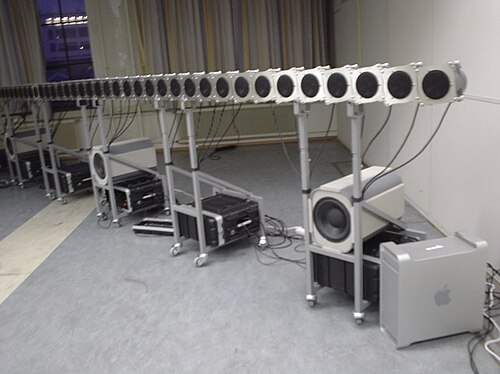
Paul Mowbray, speaking from a technical perspective, noted that sound systems in dome design are often "considered an afterthought" even though sound "is absolutely a massive part of any kind of theatrical or cinematic experience. But I think even more so in an immersive environment." He highlighted a few standout venues — "Hamburg, Berlin in Germany, down at the market hall. They've got a standing sound system" — as exceptions to an otherwise underwhelming norm.
For makers with strong spatial audio capability, this represents a genuine competitive differentiator. Not a niche interest — a gap the community is actively aware of and frustrated by.
On Technology: The Honest Picture
Resolution — the permission to stop panicking
Paul Mowbray's State of Fulldome Tech talk is the most technically rigorous in the archive. His resolution argument deserves direct quoting: "If you're in the middle, perfectly in the middle of a dome, the resolution is 10,000 by 800 pixels. So if you're in the middle of that dome and you've got great eyesight, you will never, if you have 12K content or 16K content and you're in the middle, you will not benefit from those pixels."
His practical conclusion: "2K totally usable for experimental work." The emerging commercial standard is 8K, but he explicitly pushed back on resolution panic: "It's not necessarily about the amount of pixels, it's about the quality of those pixels. And so you're better off focusing on less, better quality pixels rather than killing yourself to make bad, high pixels."
Projection technology in transition
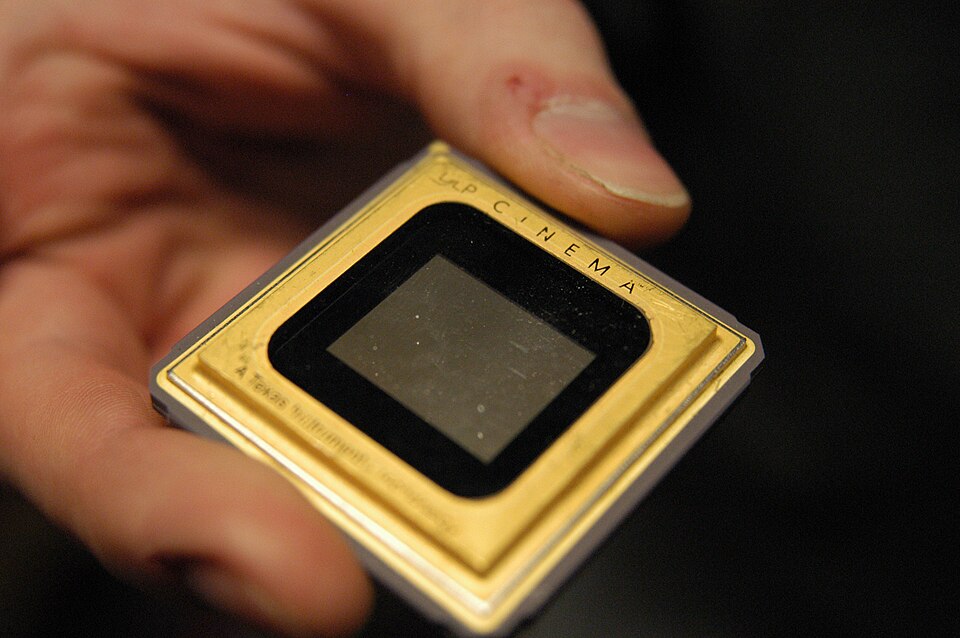
The current state of dome displays is in active transition. Most venues still run DLP projectors (single-chip cheap, 3-chip better); laser-phosphor has been "a game changer for projection mapping over the last few years" according to Mowbray; 6P RGB laser is emerging as the high-end standard with significantly better colour gamut and black levels.
Cross-reflectance — light bouncing around the dome interior — was flagged as a persistent problem that most venues still don't solve well. It affects blacks and washes out fine detail. This is why content with strong contrast and intentional dark regions often looks better on dome than content optimised for flat-screen display.
LED domes: coming, but not soon
Multiple speakers addressed the LED dome question directly — driven by the attention surrounding venues like MSG Sphere in Las Vegas. The honest answer from Paul Mowbray: "LED wall, LED dome, LED light as finally kind of, it's coming of age. It's still incredibly, incredibly expensive and very, very challenged to do."
Front Pictures announced their "Spherics" system at FDUK — triangular curved LED modules that aim to solve the scalability problems of current LED dome technology. As Yuri Kostenko (Front Pictures) explained, current LED domes "basically kind of inherent in this approach so most of the companies who make them they just adopted rectangular models made them trapezoid and connected them together." Spherics uses a fundamentally different geometry.
The more interesting near-term story is how LED dome R&D is improving projection dome technology — better dynamic range, new calibration methods, and trickle-down lighting tech that benefits conventional installations.
The 6 Golden Camera Moves
Max Crow's talk on The Making of Summer (NSC Creative) contained the most concrete, immediately actionable production guidance in the archive — a hierarchy of camera techniques for dome, ordered from safest to most dangerous. His explicit advice: work through these in order. "Most beginners," he warned, jump straight to freeform keyframing — "and they shouldn't, as you go to it last, if ever."
Still camera
The most underrated move in dome. "Let objects move toward the camera." Crow calls it "a very, very important powerful camera move by absence of camera move." Extremely effective for starfields, particle clouds, environmental transitions.
Single-axis rotation with zoom
Rotate on one axis while adjusting focal distance. "This is very, very simple but it's located around a central point." Works reliably at any resolution or frame rate.
Two-axis rotation
"2 degrees of rotation... don't worry about the rotation orders, that's not for you unless you're really into cameras." Introduces a sense of spatial inhabitation without full path animation complexity.
Path follow
"Path follow a NURBS path and stick your camera on that and bind that to that and you adjust the shape around where you go and you can adjust the duration and speed as you go along the path."
Constraint-based look-at + path
"I'm using a constraint here to look at an object, it's following the path and looking at things. You can also... just free camera it and you can change the rotations of the camera whenever you want."
Freeform keyframed camera
The most dangerous move. Crow's direct quote: "Never use it unless you're a trained professional and you've had freeform camera training." He proved his own point: the freeform final shot of Summer "took the longest to do."
On Storytelling: What Doesn't Transfer from Film
Christopher Morrison's talk (Everything We Know About Story Is Wrong) is the most philosophically ambitious in the archive. His core argument: the conventions of screen narrative — the three-act structure, the hero's journey, conflict as story driver — were designed for rectangular flat screens. "What we're doing is we're using old models that don't fit the technology that we are telling the stories with."
Morrison specifically called out the hero's journey ("Fuck the hero's journey," he said, unapologetically) and the three-act structure's obsession with "rising tension or rising action." His proposed alternatives draw from different traditions: the Japanese Ki-sho-ten-ketsu structure (introduction, development, twist, conclusion — without requiring escalation), wave structures where "your climax is in the center" with equal story on either side, spiral structures that "loop around and come back," and radial/explosion structures where every scene grows back to a central event.
Other speakers touched on storytelling from different angles:
- Audio-first composition. Max Crow described his process: "If you pick your music then you've got your fix duration." Start with audio, build visuals to fit. The entire show was scored before frames were rendered.
- Presence over narrative. Michaela (Climate Crimes) made the key distinction: "In a normal cinematic experience or on our screens we're looking at something... but in the dome we're in it, we're not looking at it, we're in it, it's an experience."
- Design for centre, not corners. The domemaster maps south to the front-of-house sweet spot and north to behind the audience's heads. Significant action in the north quadrant is wasted on most viewers.
- Shared experience as the point. The dome is not VR. You are in it together. As Aaron Bradbury noted, the communal dimension is what makes dome distinct from headset-based immersion.
Software Tools: What People Are Actually Using
Across the 21 talks, a consistent toolkit emerged. Not the tools everyone says you should use — the tools people are actually shipping work with:
The Festival Ecosystem
Several talks addressed the global festival circuit — both as distribution infrastructure and as community. The picture that emerged is a small network of interconnected events, not a hierarchy:
- FullDome Festival Jena — Germany. The longest-running international fulldome festival, running out of the Zeiss Planetarium. Now coordinated with other world festivals as part of the "Best of Earth" network. The most accessible near-term distribution target for European makers.
- SAT / IX Symposium — Montréal. SAT (Société des arts technologiques) runs what Mike Phillips described as home to pioneering work in networked domes and real-time immersive art. The IX Symposium is the artistic/research entry point alongside the residency track.
- Fulldome UK (FDUK) — UK (Cardiff in 2026). The community hub for UK/European makers. Submissions open now, deadline 4 June 2026.
- Dome Fest West — Colorado, USA. Growing US art-focused festival.
- Dome Dreaming — Sweden. Smaller, more experimental — worth watching for European art-side submissions.
SAT Montréal: What the Community Says
SAT Montréal came up in more talks than any other single venue — and always with respect. What makes it different:
- The Satosphère is a tilted fulldome with one of the most sophisticated spatial audio environments in the world
- SAT runs an artist residency programme specifically for fulldome and immersive media
- The IX Symposium (annual) is the academic/practitioner conference affiliated with the venue
- TouchDesigner is their primary real-time environment for live performance
- Mike Phillips, who has collaborated with SAT, noted it as a key node in the international network of experimental dome practice
What's Still Being Figured Out
The talks were also candid about what the community doesn't yet have answered:
- Live performance standards. The tooling for real-time dome (TouchDesigner, Unreal, NDI) is maturing fast, but there's no settled standard for how a "live fulldome performance" is structured, delivered, or evaluated. Mike Phillips' networked dome experiments are "early stages" — as he put it, "at the moment... it involves shouting very loudly."
- Multi-format strategy. The Vestige case study (volumetric capture → Unity → dome + VR + flat-screen from one pipeline) is impressive but complex. Most makers are still choosing one format and optimising hard for it.
- Narrative for non-linear audiences. Christopher Morrison's storytelling talk raised more questions than it answered — deliberately. What does a dome-native story structure look like? The community is still building the vocabulary.
- Audio delivery standardisation. HOA is the agreed direction, but specific channel counts, order, normalisation and delivery formats vary by venue. There's no FilmFreeway equivalent for spatial audio specs.
🎤 Speakers
The FDUK resource archive features practitioners from the UK fulldome community and international collaborators — producers, VJs, venue operators, technologists, and storytellers.
Talk Index
For reference: all 21 talks in the FDUK resource archive, with a one-line summary and a relevance rating for practitioners making original dome content.
| # | Talk | Speaker | For makers |
|---|---|---|---|
| 01 | We Make Our Future | Josh Yates | Context |
| 02 | Domescapes / Magical Garden | Team3 | Medium |
| 03 | Blendy Dome VJ / Sphere Mapping | Pedro Zaz | High |
| 04 | Domes for Good | Lyndsey Hall | Medium |
| 05 | Everything We Know About Story Is Wrong | Christopher Morrison | High |
| 06 | All the World | Mike Phillips | High |
| 07 | State of Fulldome Tech 2023 | Paul Mowbray | Essential |
| 08 | Immersion for Tourism | Matt Wright / 4Pi | Medium |
| 09 | 100 Years of Jena | Mickey Riemann | Festival context |
| 10 | Moonraker Case Study | Simon Clark / Graham | Medium |
| 11 | A to Z of Fulldome | Matt Wright | High |
| 12 | From Chicago to the Multiverse | Mike Small / Adler | Medium |
| 13 | Collaboration Is Key | Mourad Bennancer / SAT | High |
| 14 | Best of Earth Global Impact | Ryan Moore | Distribution |
| 15 | Climate Crimes | Michaela | High |
| 16 | Experimental Storytelling | Michael French | Medium |
| 17 | ScreenBerry New Opportunities | Yuri Kostenko / Front Pictures | High |
| 18 | Future of Immersive / Sphere Panel | Panel | High |
| 19 | Behind the Scenes: Allison | Allison Production Team | Low–Medium |
| 20 | The Making of Summer | Max Crow (NSC Creative) | Essential |
| 21 | Introducing Festoon Software | Michael Gandham et al. | High |
A Note on the Archive
A few notes for anyone who wants to go deeper. Some of the talk recordings are primarily musical content with limited narration — the production guidance attributed to speakers in this piece was extracted from audible speech where available. Some file labels in the archive may not precisely match content — if a specific talk matters to you, cross-reference with the original video. Talk numbering in our index reflects thematic grouping rather than strict archive ordering.
The talks are free to watch at fulldome.org.uk/resources. If you make work for the dome and haven't watched Paul Mowbray's State of Tech talk and Max Crow's Making of Summer, those are the two to start with.
Published March 15, 2026 · Analysis based on 21 talks from fulldome.org.uk/resources · Transcription: OpenAI Whisper · Synthesis: FulldomeFever